
Concern · Assessed at consultation
Pigmentation, Dark Spots & Sun Damage Treatment in Birmingham
Uneven pigmentation, dark spots and sun-related discolouration can make the complexion appear patchy, uneven or less radiant. At Hello Skin Clinic Birmingham, we take a consultation-first approach to assess your skin, understand your pigmentation concerns and discuss suitable professional treatment and skincare options.
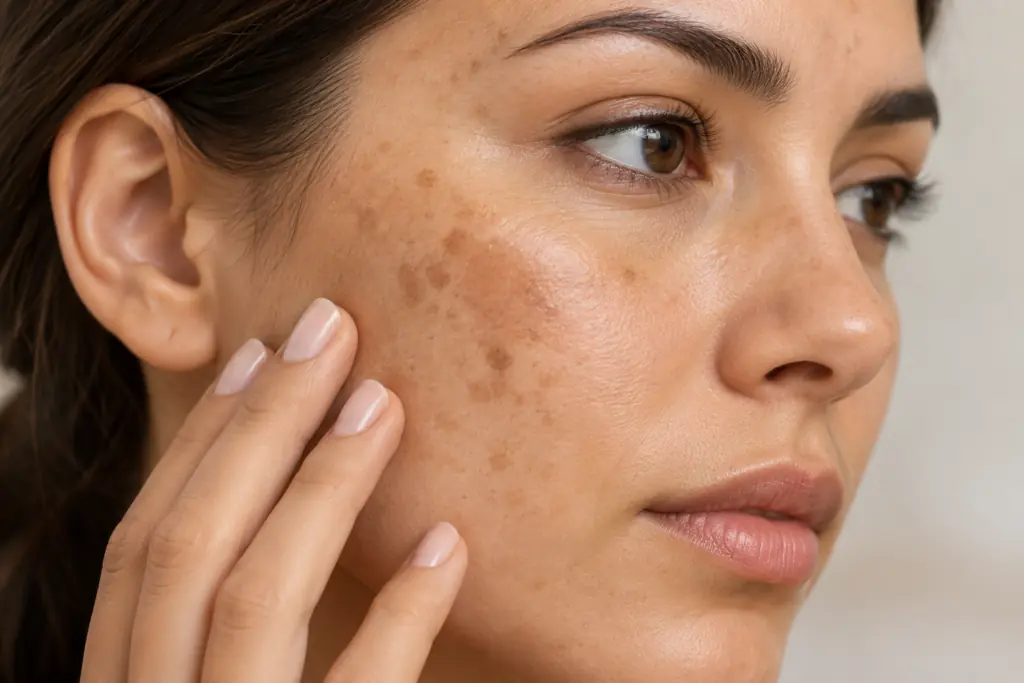
Understanding Pigmentation, Dark Spots & Sun Damage
Pigmentation describes changes in skin colour that can create darker patches, spots or areas of uneven tone across the face or body.
Some people notice individual dark spots, while others experience broader areas of discolouration following sun exposure, previous breakouts, inflammation or changes within the skin.
Because pigmentation can have different causes and behave differently between skin types, we begin with an individual assessment before recommending treatment.
Common concerns may include:
- Dark spots and patches
- Uneven pigmentation
- Sun-related discolouration
- Age spots
- Post-acne dark marks
- Post-inflammatory pigmentation
- Uneven skin tone
- Dull or patchy-looking complexion
- Pigmentation on the face, neck, chest or hands
What Can Cause Pigmentation & Dark Spots?
Changes in pigmentation can develop for several reasons, and understanding the likely contributing factors is an important part of planning treatment.
Factors may include:
Sun Exposure
Repeated exposure to ultraviolet radiation can contribute to uneven pigmentation, visible sun damage and darker areas developing over time.
Post-Inflammatory Pigmentation
Breakouts, irritation or inflammation may leave darker marks behind after the skin has healed.
Hormonal Changes
Hormonal fluctuations can influence pigmentation patterns in some individuals and may contribute to areas of uneven skin colour.
Skin Trauma or Irritation
Picking, scratching, aggressive treatments or repeated irritation can sometimes contribute to lingering areas of discolouration.
Ageing & Environmental Exposure
Changes within the skin combined with cumulative environmental exposure may make pigmentation and age-related dark spots more noticeable.
Individual Skin Characteristics
Skin tone, genetics, previous sun exposure and how your skin responds to inflammation can all influence the appearance of pigmentation.
Pigmentation Treatment Options at Hello Skin Clinic
Every pigmentation concern is different. Following consultation, we may discuss professional treatments designed to support skin renewal, improve the appearance of uneven tone and help create a clearer, more balanced-looking complexion where suitable.
Chemical Peels
Professional chemical peels support controlled exfoliation and skin renewal and may help improve the appearance of superficial pigmentation, post-acne marks and uneven skin tone where appropriate.
DMK Skin Treatments
A personalised DMK skin programme may be recommended to support overall skin function, renewal and the appearance of uneven pigmentation depending on your individual skin assessment.
SQT Bio-Microneedling
SQT Bio-Microneedling may be considered for suitable clients looking to improve the appearance of uneven tone, post-breakout marks, texture and selected pigmentation concerns through a skin-renewal approach.
Your Pigmentation Consultation in Birmingham
We don't expect you to know what type of pigmentation you have or which treatment you need before visiting us.
During your consultation, we will discuss:
- Your main pigmentation concerns
- When you first noticed the discolouration
- Areas of the face or body affected
- Previous acne or inflammation
- Your history of sun exposure
- Your current skincare routine
- Previous professional treatments
- Skin sensitivity and suitability
- Your goals and expectations
- Suitable professional treatment options
- Recommended homecare and sun protection where appropriate
From there, we can discuss a personalised treatment pathway based on your skin rather than treating every form of pigmentation in the same way.
Consultation First. Treatment Second.
At Hello Skin Clinic, pigmentation is not treated as one single skin concern.
Sun damage, post-acne pigmentation, age-related dark spots and other forms of discolouration can have different characteristics and may respond differently to treatment.
We first assess your skin, understand what you would like to improve and determine which treatments available at the clinic may be suitable for your skin type and concern.
Daily sun protection may also form an important part of maintaining results and helping reduce further visible sun-related pigmentation.
If a pigmented area is new, changing, irregular or requires medical assessment, we may recommend that you speak with your GP, dermatologist or another appropriate healthcare professional before aesthetic treatment.
What Happens at Your Skin Appointment
Step 1 / 4
Consultation
Tell us about your pigmentation, dark spots, skincare history and what you would most like to improve.
08 — FAQs
Questions, answered.
What is the best treatment for pigmentation and dark spots?
There is no single treatment that is suitable for every pigmentation concern. The most appropriate option depends on the type and depth of pigmentation, your skin tone, the area affected and individual suitability. We recommend beginning with a skin consultation.
Can you treat sun damage and age spots?
Selected professional treatments may help improve the appearance of visible sun-related pigmentation and age spots where suitable. Your skin will need to be assessed first to determine which options may be appropriate.
Can you treat dark marks left after acne?
Yes, some professional skin treatments may help improve the appearance of post-inflammatory pigmentation and dark marks remaining after breakouts. If textural acne scarring is also present, a different or combined treatment approach may be discussed.
How long does pigmentation treatment take to work?
This varies depending on the type of pigmentation, treatment selected and individual skin response. Some changes may become noticeable after individual sessions, while other concerns may require a course of treatments and ongoing skincare.
How many treatments will I need?
The number of sessions varies between individuals. Pigmentation concerns can be complex, so your practitioner will discuss the likely treatment course and realistic expectations following assessment.
Can pigmentation come back after treatment?
Pigmentation can sometimes return or become more noticeable again, particularly with continued sun exposure, hormonal influences or inflammation. Ongoing skincare and appropriate sun protection may therefore be recommended.
How long does it take to see improvement?
Treatments that work through skin renewal or collagen stimulation usually require time. Improvements may develop gradually over several weeks or months, and multiple sessions may be recommended depending on your treatment plan.
From the journal
Your options and suitability are discussed at a free consultation before you decide.
Book
Start with a free consultation.
Consultations are free. Suitability, options and realistic expectations are discussed before any treatment is booked.
Before you book, on this page: common questions
Practitioner information: The Clinic Director’s qualifications and training →
General clinic experience — not a review of this treatment
Mary was very kind and welcoming and explained everything good.
One person’s experience, not a promised result. More client feedback →