
Concern · Assessed at consultation
Thinning Crown, Visible Scalp & Low Hair Density Treatment in Birmingham
Reduced hair density around the crown or other areas of the scalp can make the scalp increasingly visible and the hair appear less full. At Hello Skin Clinic Birmingham, we take a consultation-first approach to assess your hair density, scalp and pattern of thinning before discussing suitable professional hair-restoration and cosmetic treatment options.
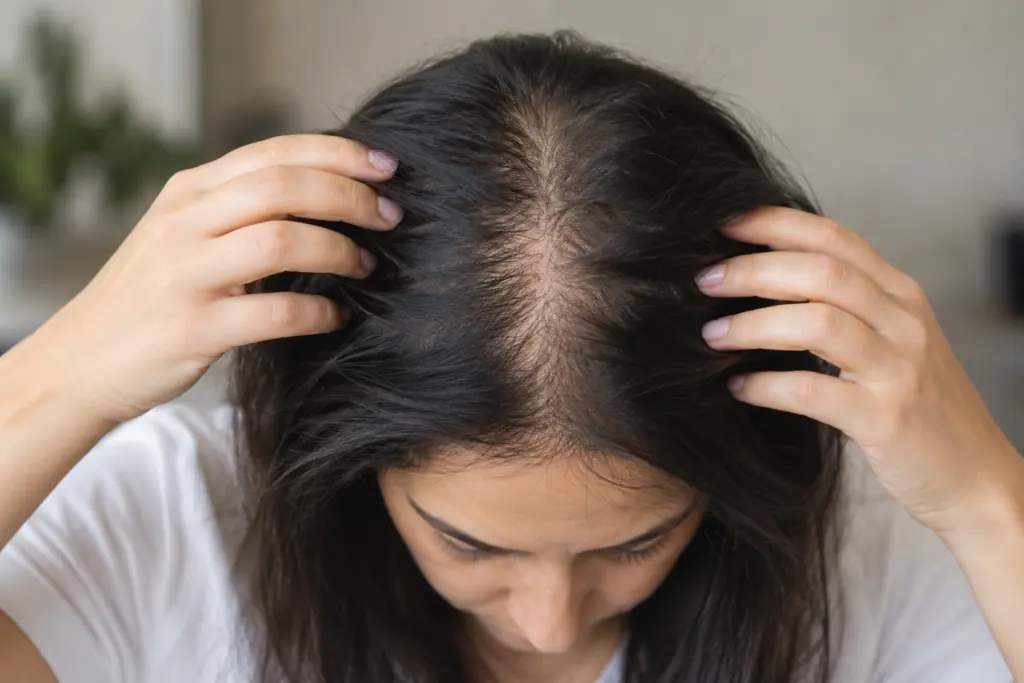
Understanding Thinning Crown, Visible Scalp & Low Density
Hair density can gradually reduce around the crown, parting or other areas of the scalp, causing more of the scalp to become visible through the hair.
Some people first notice a widening crown or parting, while others experience more generalised thinning that makes their hair appear less full than it previously did.
The appearance of low density can be influenced by the number of hairs present, individual strand thickness, hair colour, scalp colour and the pattern of hair loss.
Because several factors can contribute to visible scalp and reduced density, we assess your hair and scalp before recommending treatment.
Common concerns may include:
- Thinning around the crown
- Increasingly visible scalp
- Reduced overall hair density
- Widening parting
- Sparse-looking crown
- Hair appearing less full
- Reduced density at the top of the scalp
- Fine or miniaturised-looking hairs
- Scalp showing through under bright light
- Progressive thinning over time
- Difficulty styling hair to conceal thinner areas
What Can Cause Thinning Crown & Visible Scalp?
Several factors may contribute to reduced hair density and increased scalp visibility.
Genetic Hair Thinning
Inherited patterns of hair loss may gradually reduce density around the crown, top of the scalp or other characteristic areas.
Changes in Hair Growth Cycles
Changes in the normal hair growth cycle may affect the number of actively growing hairs and overall density.
Ageing
Individual hair strands may become finer and overall density can gradually change with age.
Hormonal Factors
Hormonal influences may contribute to certain patterns of thinning in some individuals.
Increased Hair Shedding
Periods of increased shedding can reduce overall density and make the scalp temporarily or persistently more noticeable.
Hair Strand Thickness
Even where hair remains present, finer strands can create the appearance of lower density and greater scalp visibility.
Scalp Health
Dryness, oiliness, inflammation or other scalp concerns may influence the appearance and environment of the scalp.
General Health & Nutrition
Certain nutritional, hormonal or health-related factors can contribute to hair changes and may require medical assessment.
Individual Hair Characteristics
Hair colour, texture, curl pattern and contrast with the scalp can all influence how noticeable low density appears.
Your Hair Density Consultation in Birmingham
We don't expect you to know why your crown is thinning or which treatment you need before visiting us.
During your consultation, we will discuss:
- When you first noticed reduced density
- Whether thinning has progressed gradually or suddenly
- Areas where the scalp appears most visible
- Changes in your crown or parting
- Your family history where relevant
- Your current hair density and strand thickness
- Increased shedding where relevant
- Your scalp condition
- Previous hair-loss treatments
- Your haircare and styling routine
- Your goals and expectations
- Suitable professional treatment options
- Whether further medical assessment may be appropriate
From there, we can discuss a personalised treatment pathway based on your existing density, pattern of thinning and individual suitability.
Consultation First. Treatment Second.
At Hello Skin Clinic, visible scalp and low hair density are not automatically treated in the same way.
One client may have early crown thinning with viable existing follicles, while another may have more established density loss where the scalp is clearly visible.
We first assess the pattern of thinning, existing hair and scalp condition before discussing treatment.
Where viable follicles remain, professional hair-restoration treatments may be considered to support existing hair.
Where cosmetic coverage is the primary concern, scalp micropigmentation may provide another option by reducing the visual contrast between the scalp and surrounding hair.
Hair-restoration treatments cannot guarantee complete regrowth, and SMP creates a cosmetic density effect rather than new hair growth.
Sudden, severe, unexplained or patchy hair loss may require assessment by a GP, dermatologist or another appropriate healthcare professional.
What Happens at Your Skin Appointment
Step 1 / 4
Consultation
Tell us where you have noticed reduced density or visible scalp and what you would most like to improve.
04 — FAQs
Questions, answered.
What is the best treatment for a thinning crown?
There is no single treatment suitable for every thinning crown. The most appropriate approach depends on the cause and stage of thinning, the amount of existing hair, scalp condition and your individual goals. We recommend beginning with a hair consultation.
Can hair grow back on a thinning crown?
This depends on the cause of thinning and whether viable hair follicles remain. Professional hair-restoration treatments may support existing follicles in suitable clients but cannot guarantee complete regrowth.
Can PRP help crown thinning?
PRP may be considered for suitable clients experiencing certain types of crown thinning or reduced density where viable follicles remain. Your practitioner will assess your hair and scalp before recommending treatment.
Can scalp microneedling improve low hair density?
Scalp microneedling may be incorporated into selected hair-restoration programmes for suitable clients. Whether it is appropriate depends on your pattern of thinning and individual assessment.
Can laser hair regrowth help a thinning crown?
Low-level laser therapy may be considered as part of a personalised programme to support existing hair in suitable clients. Hair changes occur gradually and results vary.
Can scalp micropigmentation hide a visible scalp?
Scalp micropigmentation can reduce the appearance of scalp show-through by creating small pigment impressions that visually increase the appearance of density. It does not regrow hair.
Do I need to know which treatment I want before booking?
No. You can book based simply on your concern. Your consultation is designed to assess your hair density and scalp and explain which available treatment options may be suitable for you.
Your options and suitability are discussed at a free consultation before you decide.
Book
Start with a free consultation.
Consultations are free. Suitability, options and realistic expectations are discussed before any treatment is booked.
Before you book, on this page: common questions
Practitioner information: The Clinic Director’s qualifications and training →
General clinic experience — not a review of this treatment
Mary was very kind and welcoming and explained everything good.
One person’s experience, not a promised result. More client feedback →